App: Fredericton Transit Accessibility App
Hosted in ArcGIS Online:
Mission Statement
Public transportation plays an essential role in creating more sustainable, connected, and equitable cities. When residents live within a reasonable walking distance of transit stops, they are more likely to use public transportation instead of relying on private vehicles. This can help reduce traffic congestion, lower greenhouse gas emissions, and improve access to employment, education, and essential services. However, when buildings are located too far from bus stops, residents may face significant barriers to using public transit, especially those without access to a car.
The City of Fredericton, like many growing urban areas, contains neighborhoods where transit accessibility may be uneven. While some parts of the city are well served by bus stops and transit routes, other areas may have buildings located beyond a comfortable walking distance from transit service. Identifying these gaps is an important step toward improving transportation accessibility and supporting sustainable urban planning.
The mission of the Fredericton Transit Accessibility App is to use Geographic Information Systems (GIS) to identify gaps in transit accessibility across Fredericton and provide an interactive tool for exploring where improvements may be needed. By analyzing the spatial relationship between buildings, existing bus stops, and walking-distance service areas, the app highlights underserved buildings and explores potential locations where additional bus stops could improve access. Through interactive mapping and narrative storytelling, the application supports more informed, data-driven, and sustainable transportation planning.
Video Presentation
Documentation
Team Members
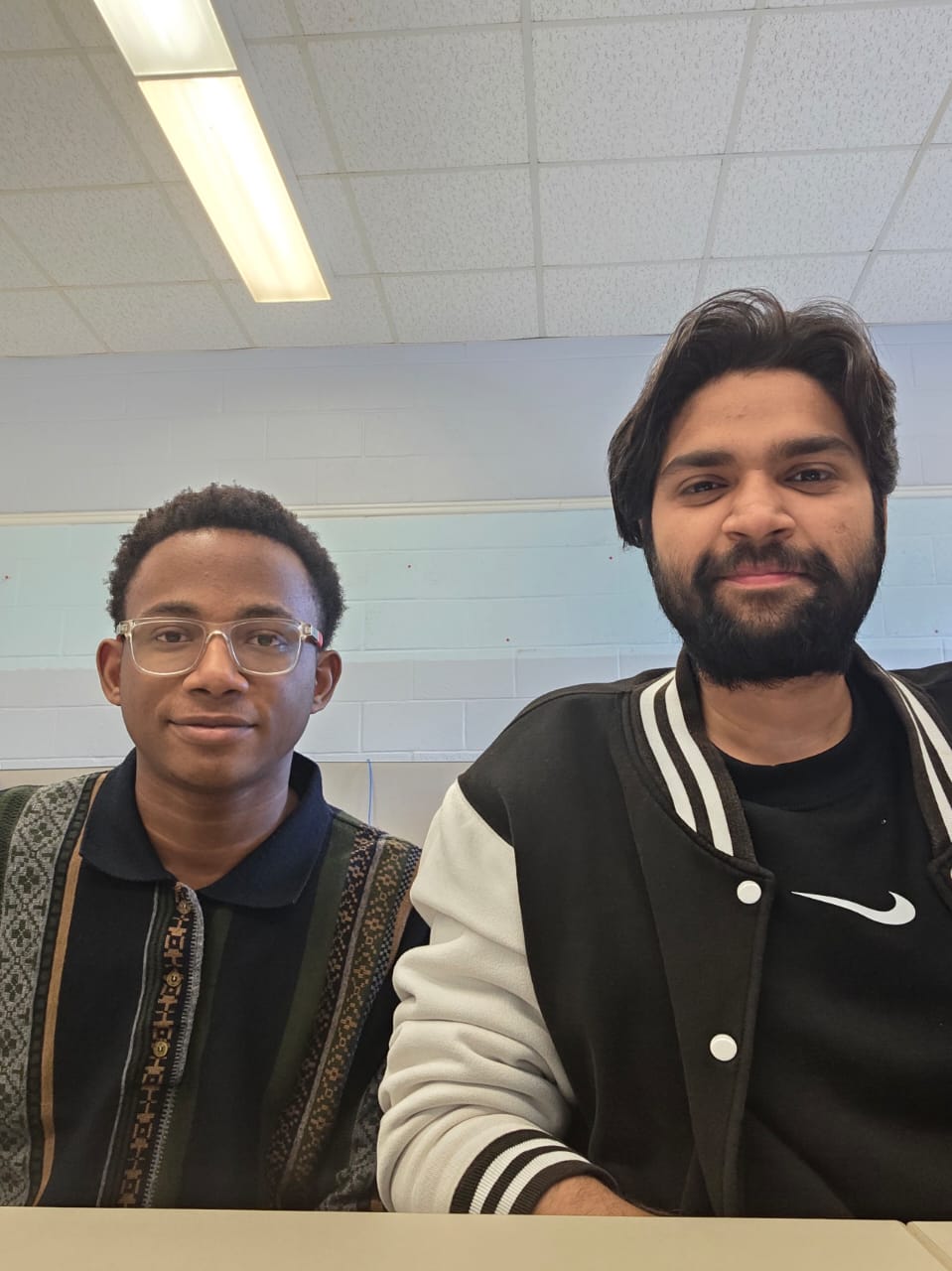
Somtochukwu Nwachukwu: I am a third-year Software Engineering student at the University of New Brunswick and a current Geomatics Analyst with experience working with geospatial data, digital mapping, and web-based applications. My work involves georeferencing historical aerial photos and maps, creating digital image mosaics, and supporting the development of web applications that make spatial data more accessible and useful. I am passionate about building practical technology solutions and enjoy working with tools such as Java, JavaScript, Python, and modern web development frameworks. I am excited to participate in the Esri App Challenge and apply my skills in software development and geospatial technologies to create meaningful solutions to real-world problems.
Muhammad Waleed: I am a Master of Computer Science student at the University of New Brunswick with a strong interest in combining artificial intelligence and geospatial technology. My interest in GIS began during my graduate studies and quickly developed into a passion for building spatial solutions. I previously worked as an AI Developer during an 8-month co-op and have prior experience in IT roles. Currently assisting the Geomatics department at UNB while preparing to graduate in 2026, I’m excited to explore innovative geospatial applications through the Esri App Challenge 2026.